Val Trompia, Lumezzane, and Valle Sabbia share a long history of metalworking. In these areas, manufacturing did not emerge as an abstract specialization, but as a concrete response to the available resources, the topography of the valleys, and the ability of local communities to transform materials, energy, and expertise into production.
Over time, mining activities and ancient water-powered forges gave rise to a technical culture capable of evolving alongside materials, machinery, and markets. This combination of expertise has created one of the most favorable environments for the production of handles and metal components.
Knowledge Built Over Time
The metallurgical tradition of the Val Trompia has been documented for centuries: iron mining, work in forges, and arms manufacturing have fostered deep expertise in metalworking and precision engineering.
Lumezzane has gradually complemented this heritage with a strong specialization in brassworking and the production of door handles, faucets, locks, household goods, and technical components. As early as the 19th century, the manufacture of door handles was among the region’s signature crafts.
The Valle Sabbia region has contributed with a diverse manufacturing sector, based on mechanical engineering, metallurgy, steelmaking, aluminum processing, die-casting, specialized workshops, and industrial services.
The result is not simply a concentration of many companies in the same area. It is a production network in which different areas of expertise come together, complement one another, and make it possible to create complex products with a level of speed, control, and flexibility that is difficult to replicate elsewhere.
The Production of Handles as a Collective Endeavor
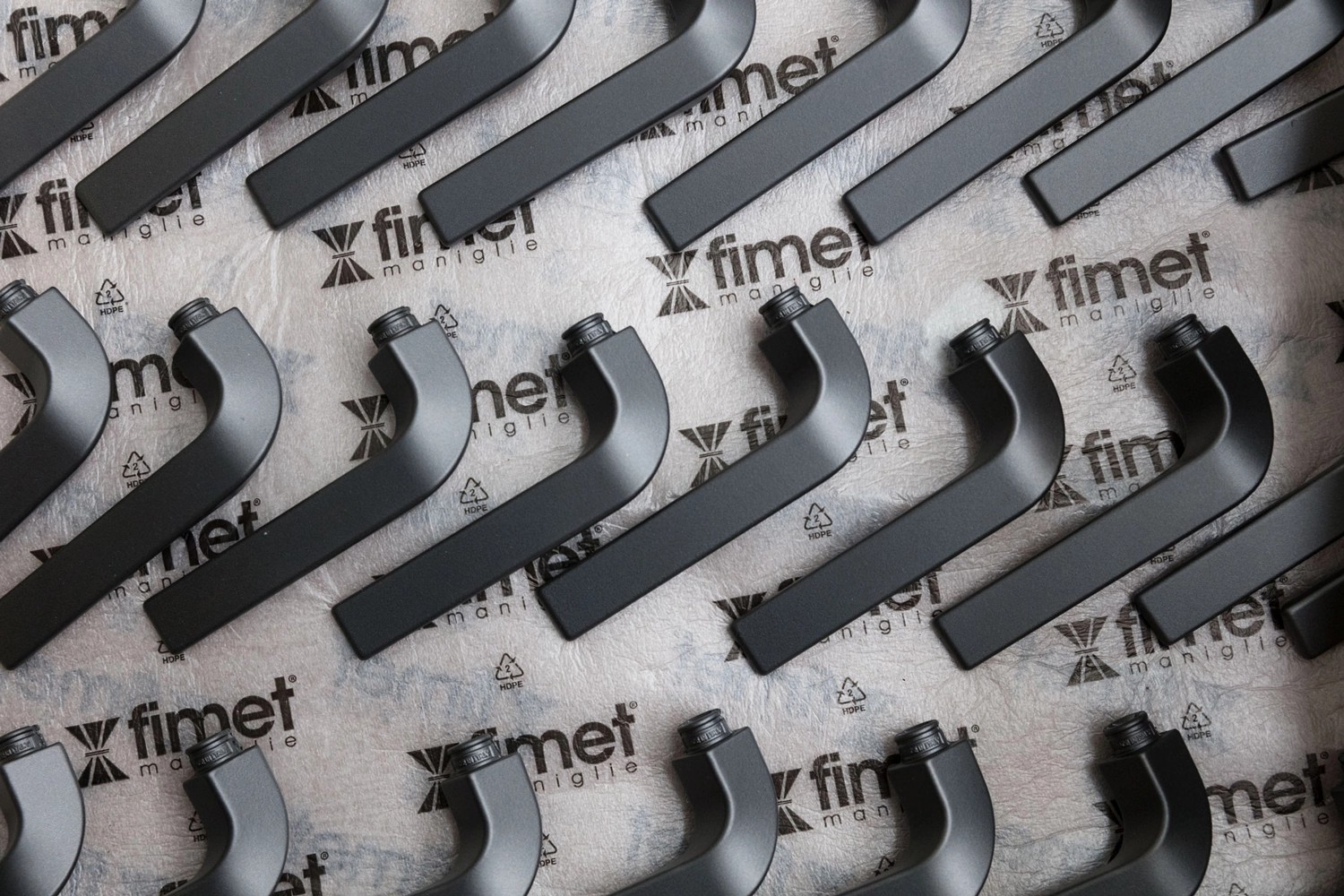
A door handle is a seemingly simple object, but its manufacturing process involves numerous steps. It all begins with the design of the model and the mold, followed by the casting or stamping of brass, zamak, aluminum, or steel.
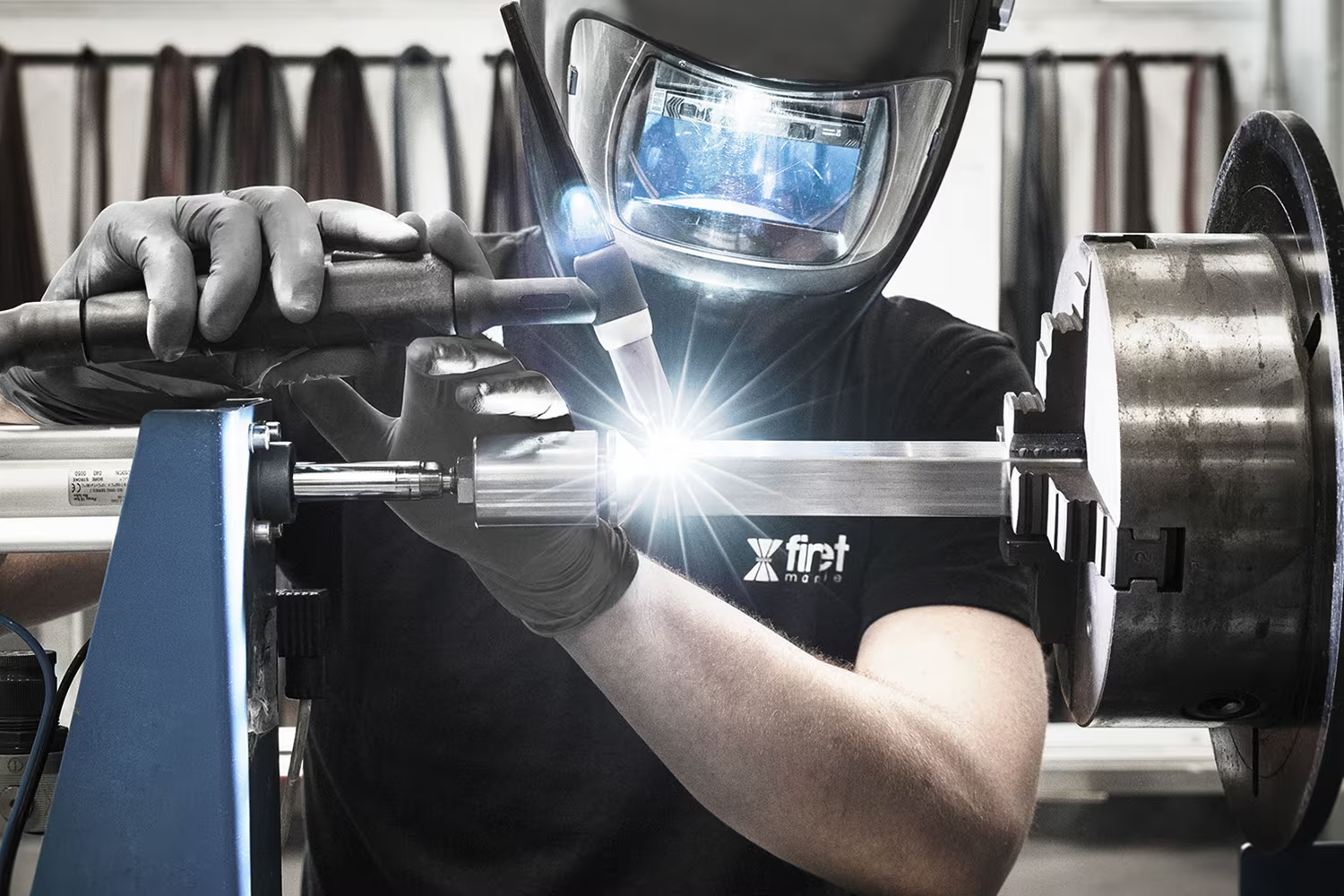
Next come the machining processes: turning, milling, drilling, deburring, grinding, and cleaning. The surface then requires equally specific expertise, ranging from polishing to satin finishing, as well as painting, electroplating, and decorative or technical finishes. Finally, assembly, quality control, packaging, and logistics come into play. Each phase influences the next, and every decision—from the alloy used to surface preparation—contributes to the aesthetic quality, strength, and durability of the finished product.
In this area of Brescia, many of these services are available nearby. Manufacturers of door handles can therefore work directly with mold makers, foundries, machine shops, surface cleaners, electroplating facilities, painters, and finishing specialists.
This proximity makes it easier to inspect a sample, make adjustments to a mold, test a new finish, or quickly address any issues that arise.
Complementarity as a Competitive Advantage
The true value of the region lies in complementarity. Companies do not necessarily need to possess every technology in-house; they can focus on the activities in which they have the greatest expertise and collaborate with highly specialized partners in other areas.
This model increases production flexibility. It allows for the management of different product lines, customizations, and variations in materials or finishes, while maintaining close control over the process.
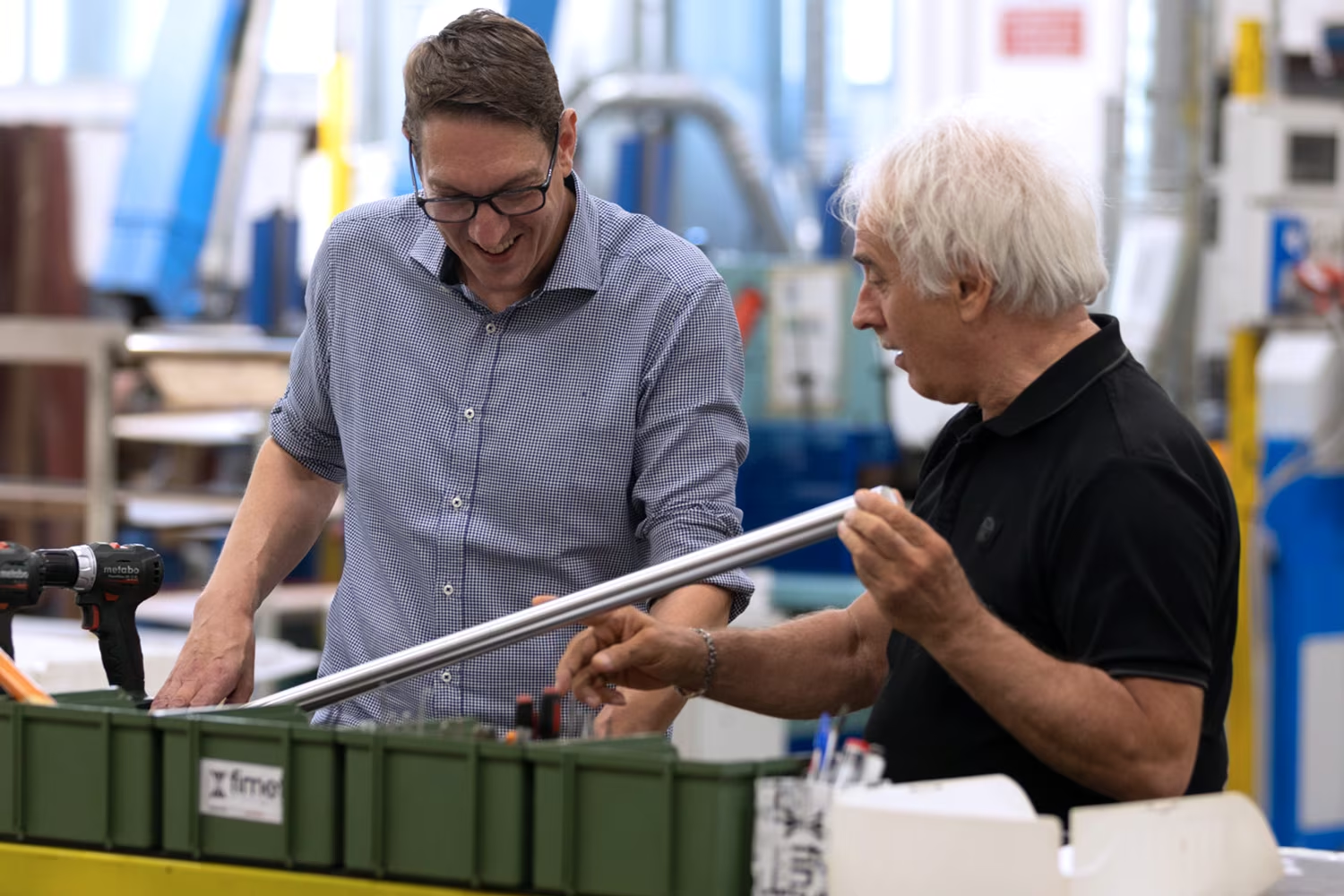
It also reduces the physical and decision-making distances between design and production. Designers, engineers, suppliers, and quality managers can quickly exchange ideas, transferring solutions and expertise from one production run to another.
A short supply chain doesn’t just mean less transportation. Above all, it means quick response times, the ability to create prototypes, and the flexibility to make changes to the product as it’s being developed. For the handle market, which is increasingly focused on design, finishes, and customization, this agility is a tangible advantage.
Industry and the Culture of Making
Over time, artisanal skills have not been replaced by automation. Instead, they have become the foundation upon which to introduce more advanced systems, digital controls, robotics, and repeatable industrial processes.
The operator’s expertise remains essential in fine-tuning the machines, interpreting surface finishes, and evaluating the details that determine perceived quality.
It is this balance that makes Brescia’s handle production instantly recognizable: industrial precision and manual sensitivity coexist within the same process. Advanced technologies ensure consistency and high production volumes; experience allows the team to handle exceptions, the most delicate machining operations, and custom requests.
A supply chain ready to evolve
Today, competitiveness also depends on the sustainability of processes, material recovery, reduced consumption, traceability, and the ability to develop increasingly high-performance finishes.
The proximity of different areas of expertise also facilitates this evolution, as it allows for the testing of shared solutions and the transfer of innovation throughout the entire production cycle.
Val Trompia, Lumezzane, and Valle Sabbia thus demonstrate how a region can become an integral part of the product. Behind every handle lies not just a design and a material, but a combination of specialized knowledge, established relationships, and complementary production capabilities.
It is within this network of expertise that FIMET has been developing its business model for forty years: engaging with the local community, coordinating diverse professional skills, and transforming local know-how into door handles capable of competing in international markets.
This is not merely a matter of geographic affiliation, but a responsibility: to help promote and raise awareness of a shared manufacturing heritage—one that has been built over time and is continually renewed.