For FIMET, innovation does not stem from the pursuit of a surprising effect, but from a deep understanding of the product. Before conceiving a new form, it is necessary to fully understand what a handle can do: its thickness, proportions, mechanical limitations, materials, finishes, and the way each component reacts to daily use.
It is from this experience, built up over time, that a new idea takes shape. Understanding every millimeter of the technical possibilities allows us to think outside the box without sacrificing precision, reliability, and industrial consistency.
Innovation, therefore, is not merely an aesthetic intuition. It is the result of expertise capable of transforming a design concept into a concrete, reproducible, and durable product.
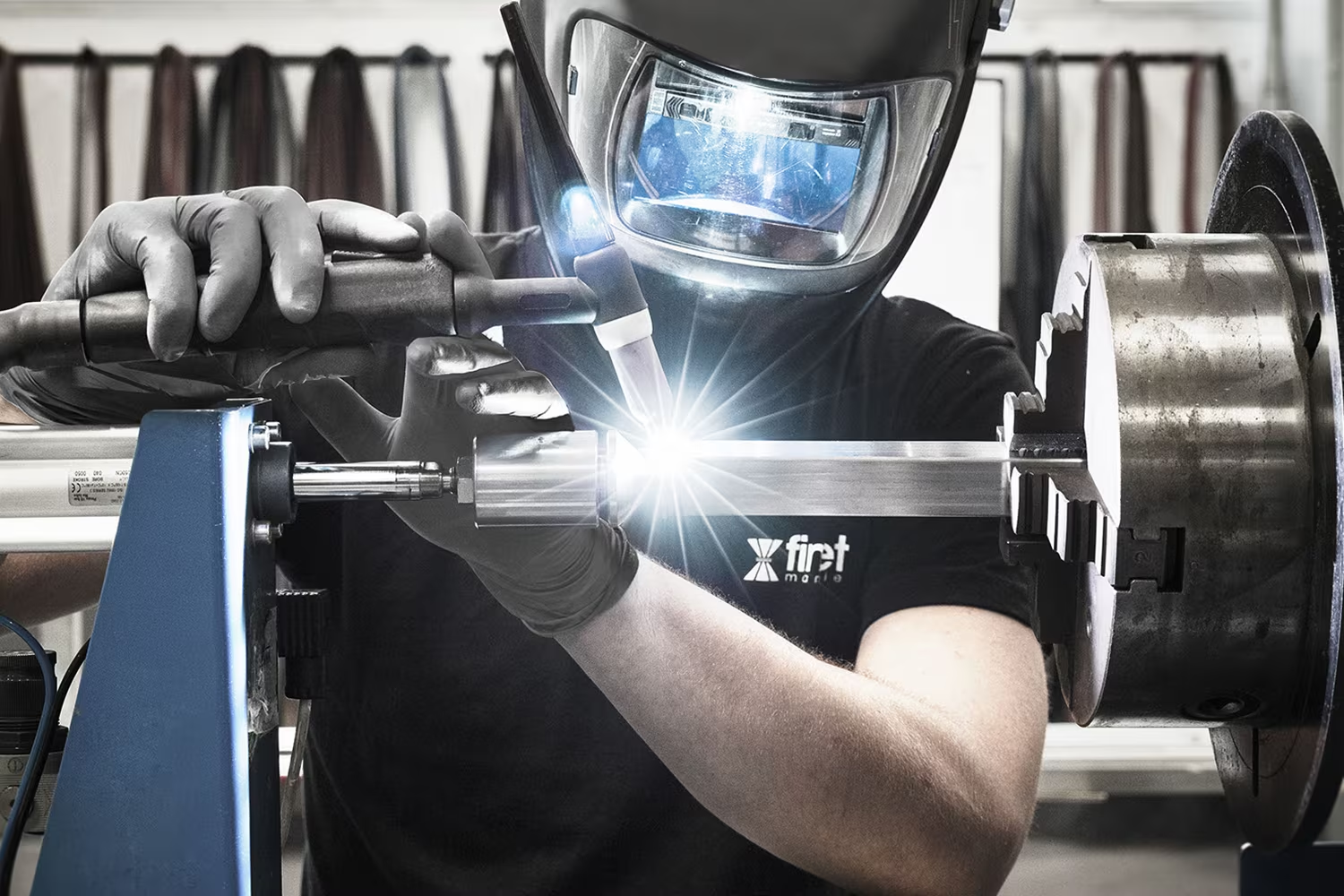
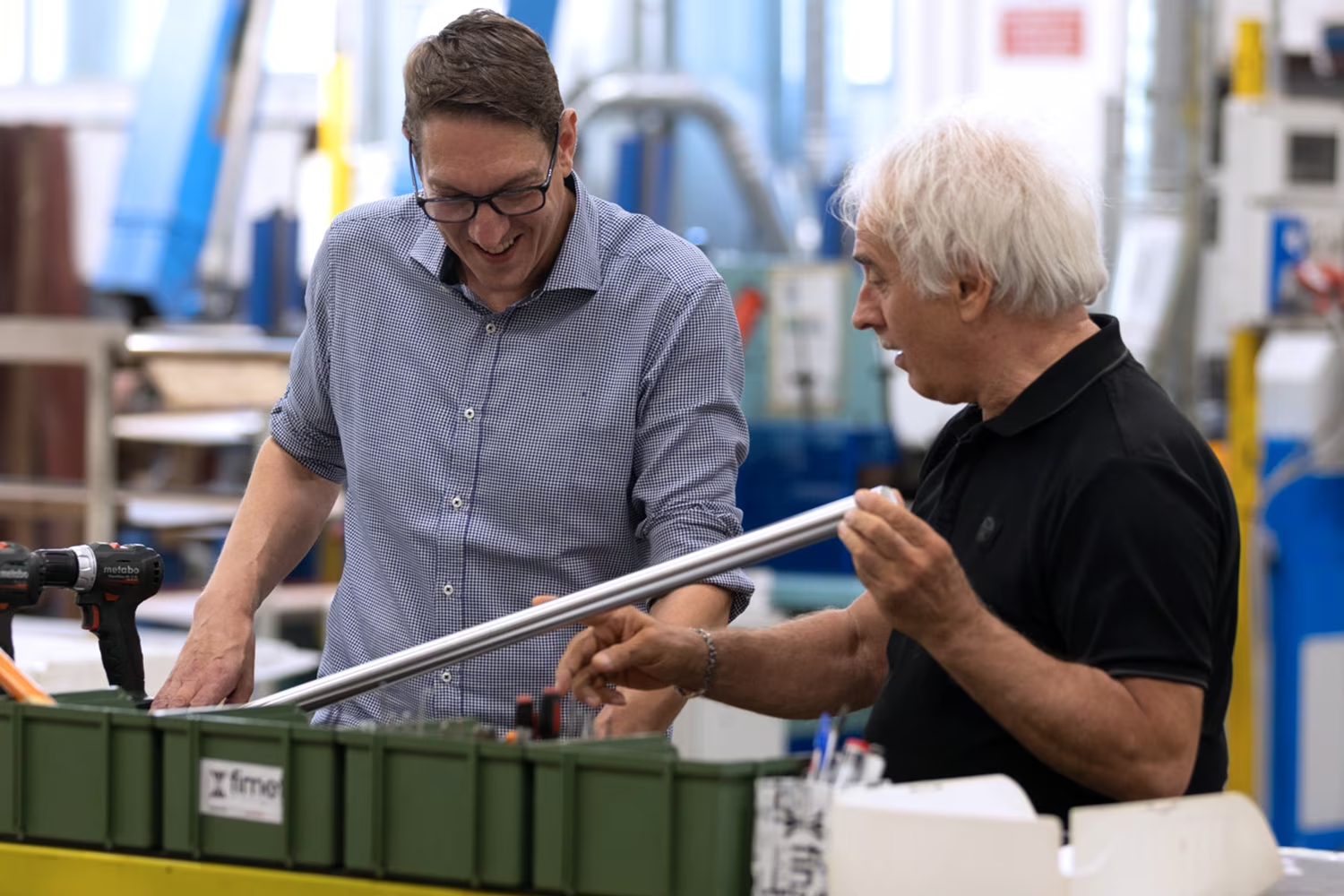
Every new FIMET handle goes through a multi-step process involving design, prototyping, testing, verification, and subsequent optimization. This process can take months and serves to evaluate not only the visual appearance but also the ergonomics, durability, ease of installation, and quality of the user experience.
Because a handle is not just a standalone decorative element. It is an object that is touched, operated, and used every day. Its value lies not merely in its form, but in the natural connection it creates between the person and the space.
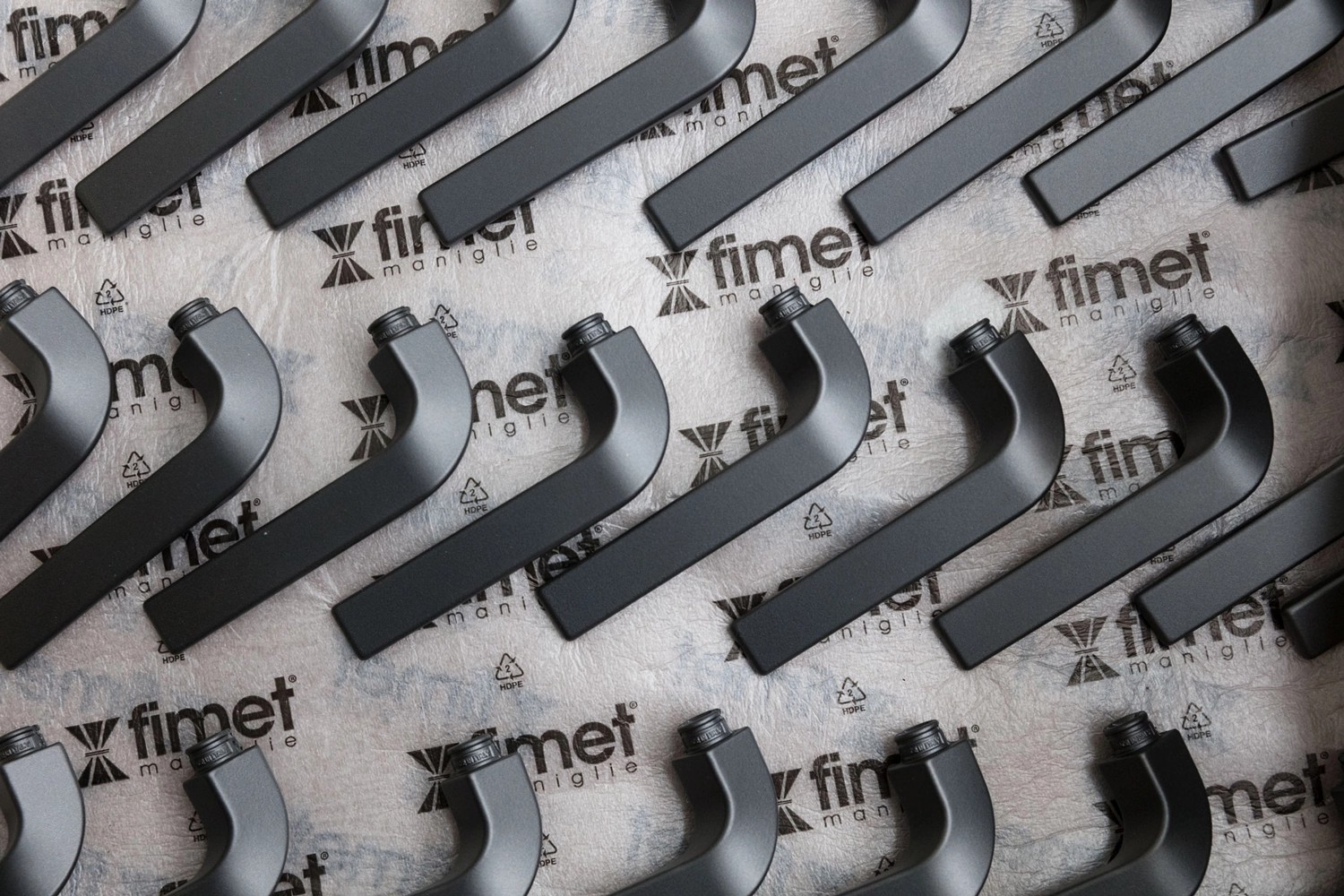
It is precisely here that the concept of innovation FIMET meets the truest essence of design. Design does not simply mean defining the appearance of an object, but rather creating a solution that can be industrialized, produced on a continuous basis, and ensure that every single unit retains the characteristics conceived during the design process.
This vision combines creativity and the production process, aesthetic sensibility and technical expertise. Every design choice must have a reason, every detail must contribute to the function, and every
solution must be capable of becoming part of a reliable production process.
It is this approach that sets FIMET apart: not a mere claim to innovation or a purely visual one, but a design capability that draws on experience to make possible what was previously impossible. Innovation, in this sense, means creating handles that offer something new—not only to the eye, but above all to the gesture, to space, and to everyday life.